
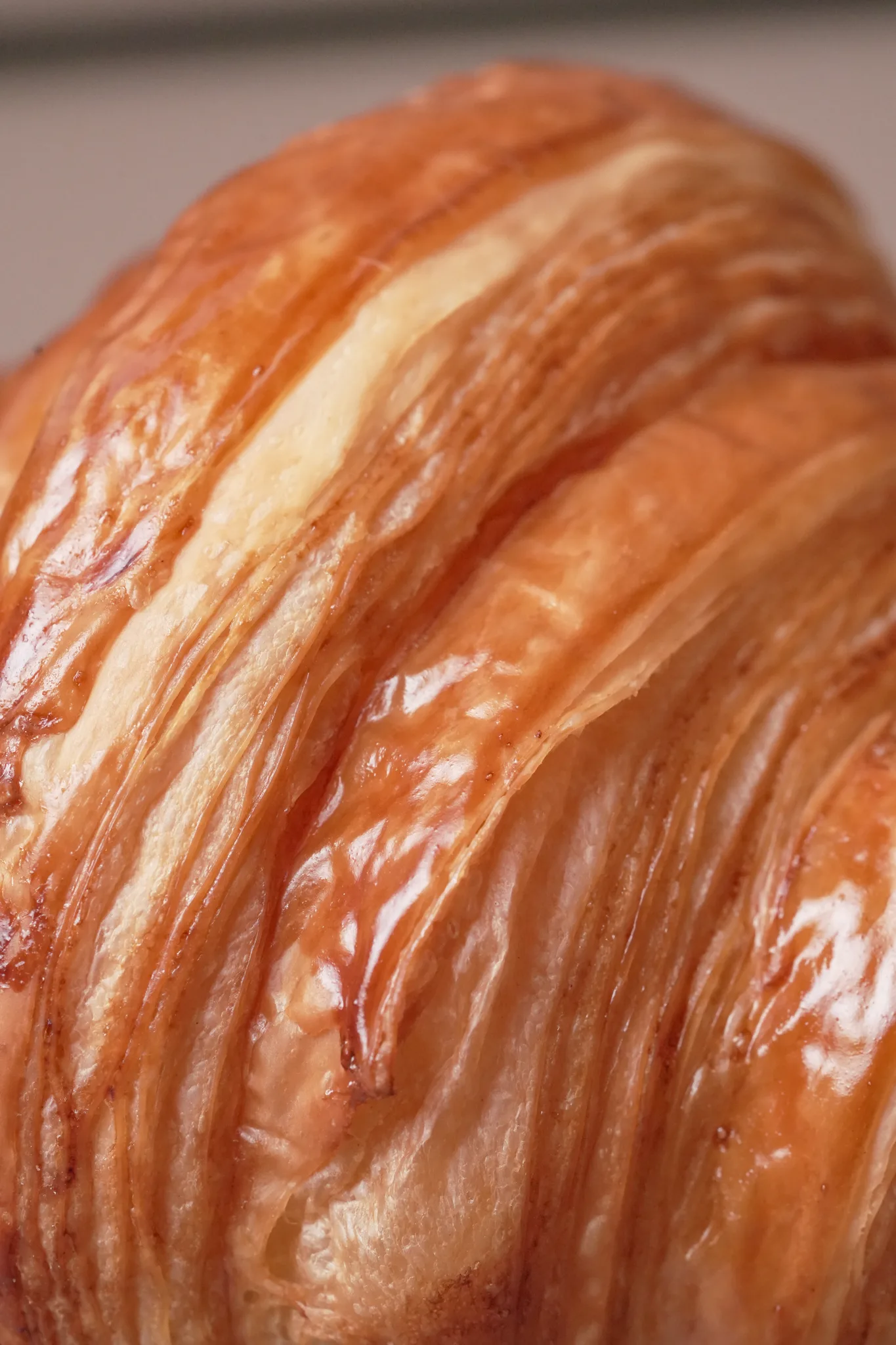
A good croissant is one of the hardest things to make in a humid climate — which is exactly why it's the best test of a Canggu bakery. Here's how to find a properly laminated one, and what else is worth ordering with your coffee.
What makes a croissant "properly laminated"
Lamination is the process of folding butter into dough over and over to build dozens of paper-thin layers. Done right, it gives you the honeycomb interior and the shattering, flaky exterior. In a hot, humid kitchen the butter wants to melt into the dough — so a bakery that nails lamination in Bali is genuinely skilled.
How to spot the real thing
- Look at the cross-section. An open, honeycombed crumb means the layers held. Dense and bready means they didn't.
- Listen when you tear it. A good croissant shatters and sheds flakes; it shouldn't pull like bread.
- Check the colour. Deep golden-brown, not pale — that's caramelised butter and proper bake.
- Go early. The best bakes are made in small batches and sell out. If they still have a full case at noon, ask when they baked.
Beyond the butter croissant
Once you've judged the plain croissant, branch out. Pain au chocolat tests the same lamination with dark chocolate batons. An almond croissant shows off frangipane. And a savoury focaccia mortadella — house focaccia, mortadella, pistachio — is the sleeper hit for anyone who wants lunch with their long black.
Where we come in
We laminate and bake by hand every morning at The Goat Father, inside The Avocado Factory in Berawa. Our croissants have a habit of selling out — locals say they're the kind that make you miss your train home. Pair one with the almond flat white and you'll understand the fuss. See the full bake list →
Published May 2026 · Updated July 2026 · By the team at The Goat Father